

What happens when you hand a teenager an AI coding tool and say “go build something”? Spoiler: it’s better than most MVPs I’ve seen in the corporate world.
I’ve spent 20+ years in product and tech learning the art of product development. I’ve spent months building things that have taken an army of talented software professionals.
And then my 13-year-old son, Arjan, built a fully functioning 3D game with Pokémon-like game mechanics, achievements, AI-generated artwork, and multiple worlds. All in roughly a week and no team.
He’s never coded and doesn’t have a computer science degree. Just a kid, a laptop, and an AI tool called Replit.
Welcome to the age of vibe coding.
What Is Vibe Coding (And Why Should You Care)?
The term was popularised by AI researcher Andrej Karpathy back in February 2025, and the idea is simple. Instead of writing code line by line, you describe what you want in plain English, and AI builds it for you.
Think of it as the software equivalent of generating images with AI. You prompt in natural language as if you are having a conversation.
It’s now gone fully mainstream. 92% of US developers are using AI coding tools daily. 41% of all code globally is AI-generated. And in 2026, vibe coding is becoming the default way non-developers build software.
The Experiment: Dolphin Quest 🐬
A bit of the backstory. About a year ago, I tried getting Arjan to build a game using AI tools. At the time, the results were, let’s just say, very underwhelming.
Fast forward to late 2025, and Replit launched its Agent feature, an AI that doesn’t just generate code but actually plans requirements, builds iteratively, and tests its own work. I thought it was time for round two.
So I set the challenge: Build whatever you want. Unleash your creativity. See what happens.
And what happened was Dolphin Quest (or Dolphin Hatch — we’re still debating the name).
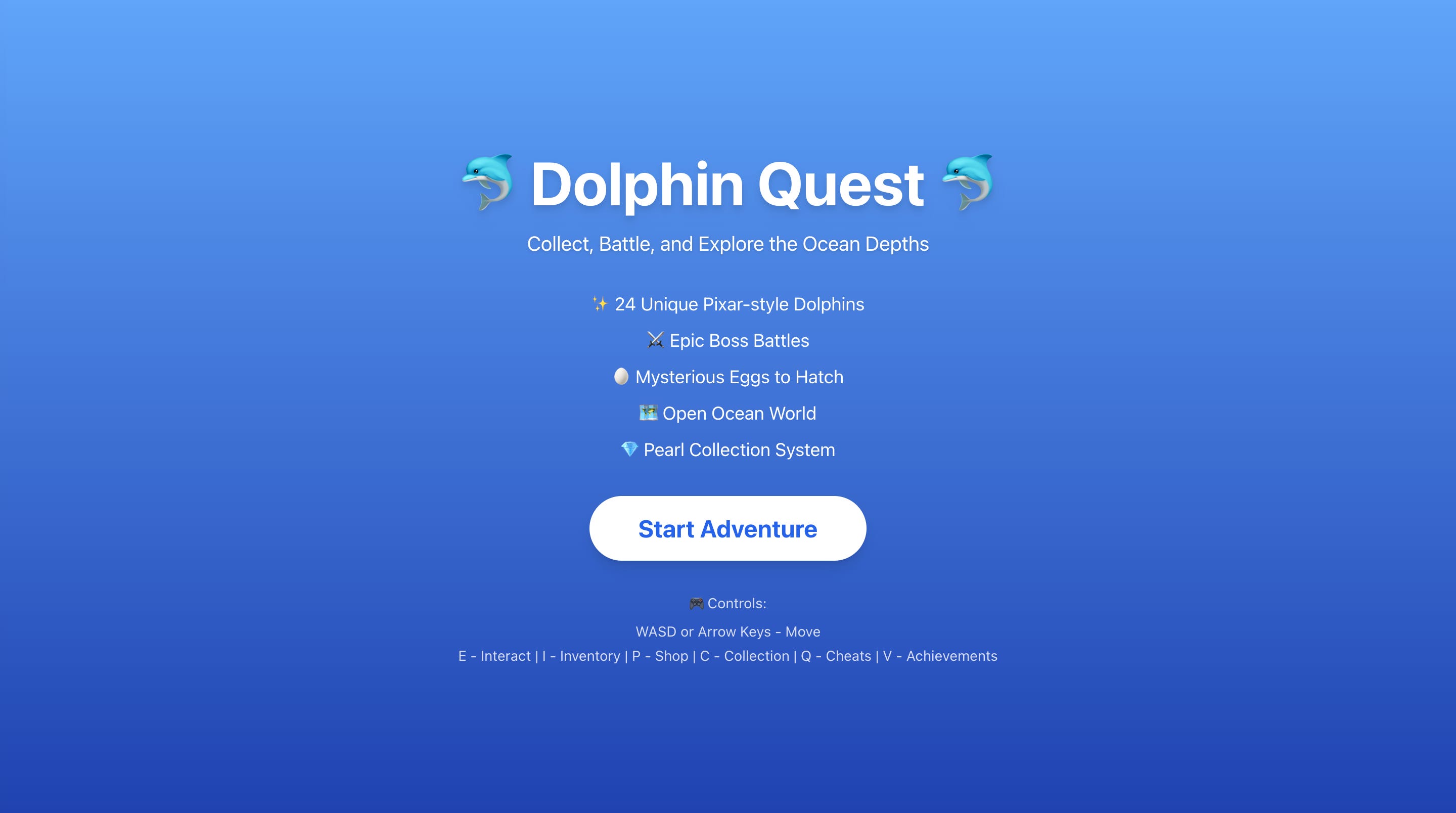
What a 13-Year-Old Built With Zero Coding Experience
Here’s what Arjan created:
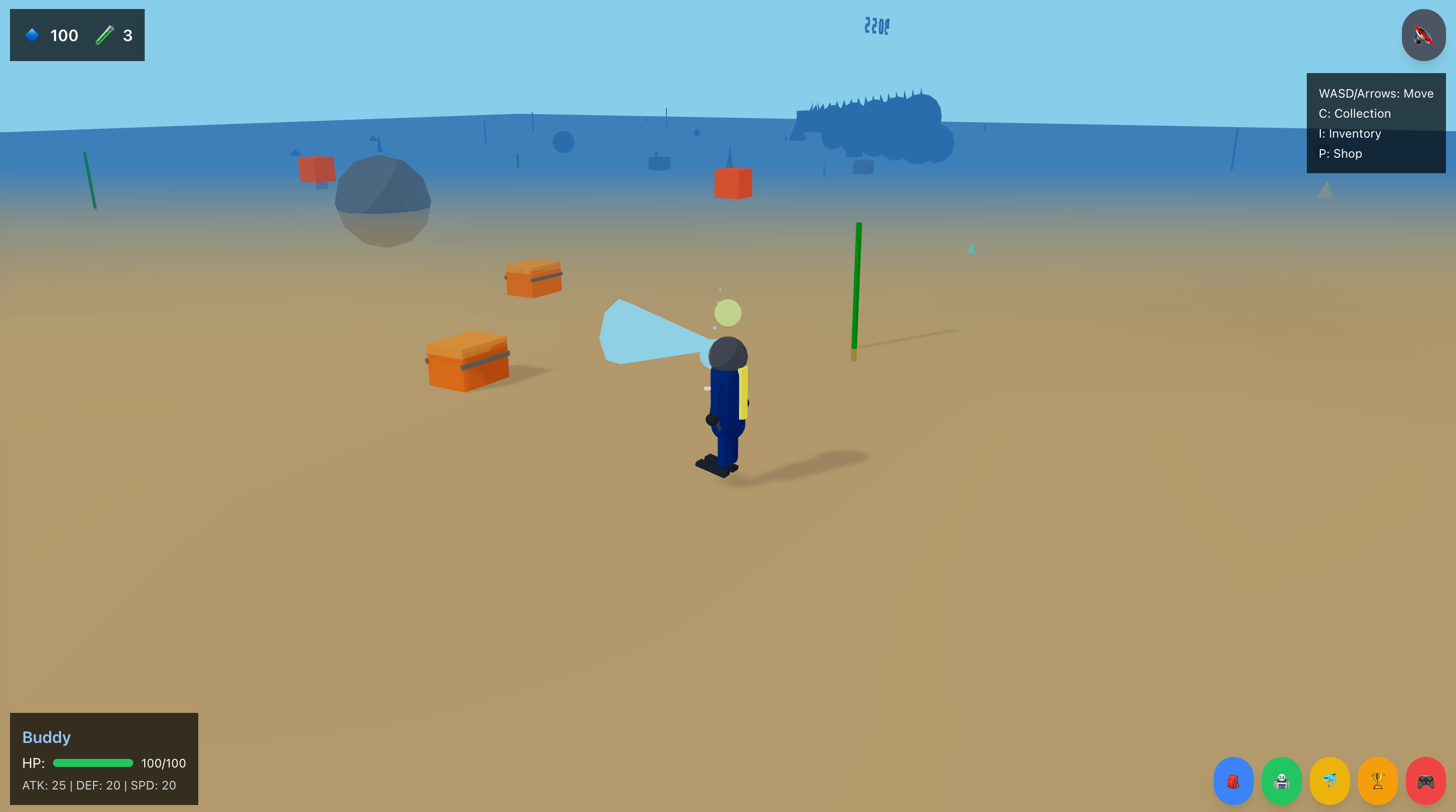
A full 3D world with multiple environments — a tropical zone and a frozen land, connected by portals. The AI generated the 3D models, the terrain, and even the ambient music.
An in-game economy built around pearls (the currency) and eggs (which hatch into dolphins). Different eggs cost different amounts, and the dolphins you get have varying stats and rarities.
A combat system — think Pokémon meets Minecraft. Your dolphins fight bosses like Captain Shellback and the Reef Shark. There are potions (freeze and health), turn-based attacks, and animations where bosses explode when you defeat them. A nice touch.
48 unique dolphins, every single one designed using AI image generators (Gemini and ChatGPT). Each has unique stats, and hidden dolphins unlock when you complete a full collection in each world.
An achievement system — because, as Arjan put it, “achievements give you a sense of purpose in the game and something to aim for.” (Product managers, take note)
A submarine for fast travel. Three times faster than walking, implemented in a single prompt. The AI nailed it the first time.
A cheats menu — not for cheating, but for testing. Arjan built it so he could rapidly test features without grinding through the game every time. Basically, he independently invented a QA workflow.
» Dolphin Quest: Click Here «
5 Vibe Coding Lessons From a Teenager
Here’s what struck me most about this experiment and why I think it’s important for anyone in product, tech, or education.
1. Creativity is the real skill, not code
Arjan had a vision: a dolphin collection game with gambling-style mechanics, combat, and exploration. The AI handled the implementation, but the game design, the feature ideas, and the user experience decisions were all human.
2. Prompting is a craft
Arjan learned quickly that vague prompts produce vague results. He also discovered that cramming ten features into one prompt confuses the AI. His approach: be clear, be specific, and go one or two features at a time. Prompting with clarity is a skill that’s only going to become more valuable.
3. AI testing changes everything
Replit’s Agent doesn’t just generate code, it also tests what it builds and debugs its own mistakes. Arjan described watching it essentially have a conversation with itself: “Oh, this name was X, and it should have been Y, and then that meant Z. So I will quickly change that.” This self-correcting loop is what makes modern vibe coding so much better than even a year ago.
4. Domain knowledge beats technical knowledge
Arjan knows the basics of Python code — variables, loops, if statements. He didn’t need any of that knowledge. What he did use was his deep understanding of what makes games fun (years of playing them), his passion for dolphins (years of obsessing over them), and his sense of what felt right as a player. The domain expertise mattered. The syntax didn’t.
5. The friction is gone — and that makes product development accessible to everyone
A year ago, AI-generated games were disappointing. Today, a teenager can build a multi-world 3D game in a week. The gap between “I have an idea” and “I have a working product” has shortened from multiple weeks to days and minutes. And when you remove that friction, you unlock creativity from people who would never have been able to build software.
So What Does This Mean for Product Teams?
I’m not going to pretend that vibe coding is ready for enterprise-grade software. There are code quality concerns that are real and serious security considerations. And anyone building production systems still needs proper engineering rigour.
But here’s what I took away from watching my son build this game:
The most valuable skill in the age of AI isn’t knowing how to code. It’s knowing what to build, why to build it, and for whom. That’s product discovery. That’s a deeply human skill.
And if a 13-year-old with no coding experience can ship a game without all of the bureaucracy we see in corporate environments, then maybe we need a new playbook for product development.
It’s time we all stopped hiding behind technical complexity and started focusing on what actually matters: creativity, user empathy, and the courage to just build something.
Arjan finished the episode with this advice to the world: “Use AI.”
I can’t argue with that. Otherwise, we’ll continue to get around using horses instead of cars.
» Dolphin Quest: Click Here «
Try It Yourself
Feeling inspired? Here’s how to get started with vibe coding:
Tools to try: Replit (what we used), Lovable, Cursor, or even regular tools such as ChatGPT or Claude’s own coding capabilities.
Start simple. Don’t try to build a full game on day one. Build a simple app that does one thing, a timer, a to-do list, or a calculator. Get comfortable with the prompt-build-refine loop.
Be specific with your prompts. Avoid general prompts like “Make a game”. Instead, be specific, “Create a 3D underwater world where the player collects pearls by opening treasure chests, with a pearl counter in the top right corner.”
Don’t batch too many features. Go one or two at a time. The AI gets confused when you throw too much complexity at it.
Build a cheats menu early. Or whatever your equivalent of a testing shortcut is. You’ll thank yourself later.
If you build something cool with vibe coding, drop me a message on LinkedIn and show me what you’ve created.
And the important question: should the game be called Dolphin Hatch or Dolphin Quest? Or something else entirely? Reply and let me know.
Paddy Dhanda is Director of Product Management & Agile at QA Ltd (UK’s biggest Tech Training organisation). He’s on a mission to champion human skills — creativity, collaboration, and communication — in the age of AI. His book Product Discovery Thinking will be available soon.
Subscribe for weekly episodes on product, AI, and the human skills that matter most.


